Mumbai & Hong Kong · Interior design & automation

Designed around
the life you
actually live.

Ambient Form Studio is an interior design and automation studio working across Mumbai and Hong Kong. From a blank shell to a finished home — or a retrofit that barely touches a wall — we plan, install and tune lighting, climate, security, cinema and the devices that were never smart to begin with, as one system.

  • For designers & architects
  • Full design or retrofit
  • Local-first, no cloud lock-in

Live demo — Floor plan

Your floor plan, as a control surface.

Tap a marker and the room responds — lights, AC, blinds, awning, projector, lock. The same plan can live on a wall tablet in the hallway, so the house is legible at a glance, not buried in a list of entities.

Residence / Level 01

Home, mapped.

Interactive demo

A representative 2BHK layout — not a scan of this home. One plan for the client, the site team and the wall tablet. Rooms, devices and scenes stay in the same language.

Ask by voice

Live demo — Voice

Ask the house.

Pre-programmed examples, not a live language model. The real assistant runs locally on the hub, so the same request still works when the internet doesn’t.

“Close the awning.”

Local wake word, speech-to-text and text-to-speech — no audio leaves the house. Pick a request to hear a sample.

Local PocketTTS voice · sample. The live hub can clone any voice you have the rights to — no cloud round-trip.

Local PocketTTS · sample

“Close the awning.”

Done. Awning closed. Rain is twenty minutes out, buddy.

Works with what’s already there
  • Zigbee
  • Wi-Fi
  • Bluetooth LE
  • Infrared
  • RF 433
  • Matter-ready
  • ESPHome
  • Home Assistant
Home Assistant

Most of the stack runs on Home Assistant. Open source, on a hub inside the home — local automations, local voice and local AI, with the cloud optional.

The brief

The best technology in a room is the technology you don’t see.

No visible boxes. No five-app chaos. No rented brain in a data centre. Just a home that responds — and interiors that stay exactly as designed.

01 — Every stage

Blank shell, renovation, or finished home.

Most automation firms only work at first fix. We start where you are: lead the whole interior, join drawings that already exist, or retrofit a finished home with almost no visible change.

01 Fresh plan · full design

Design it in from the start.

Empty shell, new build or a full redo. We can lead the interior — space planning, materials, lighting and joinery — with automation designed into the same drawings.

  • Full interior design
  • Lighting & joinery
  • Device schedule & commissioning
Starting from zero
02 Renovation

Join the drawings.

You already have a plan, a designer or a contractor. We plug into it, coordinate first fix, and keep the technology invisible.

  • Work with your designer
  • First-fix coordination
  • Minimal visible change
Mid-renovation
03 Lived-in home

Change almost nothing.

The home is finished and you’d rather not open a wall. IR, RF, relays and battery sensors bring existing devices into one system — reversible and renter-friendly.

  • No chasing walls
  • Reversible & renter-safe
  • Existing devices stay
Finished home

One studio from concept to commissioning. The scope changes; the standard doesn’t. Not sure which stage you’re in? Send a floor plan and a photo — we’ll tell you.

The automation ladder

An app is level one.
A home is level three.

Most “smart homes” stop at remote control: an app that replaces a switch. The useful jump is when the house reacts to presence, light, time and context — without you opening anything.

01 App control

Remote control with extra steps.

One app per brand. You still do the thinking. Fine as a start; not a system.

  • One app per ecosystem
  • Manual taps & remotes
  • “Smart” only when you remember
02 Routines

Scenes and schedules.

One app, a few routines, sunrise and sunset. Less tapping — but the house still waits for a trigger.

  • Morning / evening scenes
  • Timers & sunrise/sunset
  • Still mostly manual
04 Local agent

Describe a new rule.

An agent on the hub can turn a plain-language request into a new automation — locally, without a ticket.

  • Local voice + local AI
  • You can edit or remove it
  • No cloud account required
Doing it yourself

The DIY tax.

  • Five apps that don’t talk to each other
  • One brand owns the decision
  • Cloud accounts, updates and lock-in
  • The family can’t work it
  • No one to call when a routine breaks
Ambient Form Studio

One layer. Any brand.

We allow anything. We’re not loyal to a brand — we make the brands work together.

  • Zigbee, Wi-Fi, BLE, IR, RF, relays
  • Matter, ESPHome, Home Assistant
  • Existing devices stay where possible
  • One interface, local hub, local automations
  • Documented, supported, yours

In practice Desk presence → monitor off · room empty → lights off · window open → AC off · rain due → awning in · sunrise → shades open.

The market

How it works now.
What we offer. Why we’re better.

The short version: the three ways a Mumbai 3BHK gets automated, what each one costs, and where our layer fits. The full landscape and sources are at the bottom.

01 — How it works now

Premium installer

₹15–30 lakhCrestron / Lutron · 3BHK

  • Best finish and bespoke keypads
  • One dealer, one warranty
  • Closed catalogue; the dealer holds the file
  • 8–15% a year after year one
  • KNX and Control4 start lower

Best if finish is everything and you want one firm to call.

DIY stack

₹1–2.4 lakhfor a 3BHK

  • Lowest upfront cost
  • Four to six apps
  • You are the support desk
  • No drawings, no commissioning

Best if you enjoy tinkering and want to start small.

Ambient Form

₹4.5–5.5 lakhfor a 3BHK

  • One app for every room
  • Works with the devices you already own
  • Retrofit without opening walls
  • No licence, no mandatory yearly fee
  • You own the system and the file

Best if you want it to work, stay open and be yours.

Why us, in one line: the same rooms and scenes for about a third of a premium quote — without five apps, a dealer holding the file, or a subscription for every device.

02 — What we offer

One local hub, one app, any brand that speaks a protocol, and a retrofit that doesn’t open walls by default. Start at ₹2 lakh for lights and presence; a whole home from ₹5 lakh. The device schedule, network map and project file are handed over.

A 3BHK, all-in

Indicative capex
Mumbai · 2026
Crestron / Lutronwired, dealer-programmed
₹15–30L
KNX / Basaltewired bus, ETS programmer
₹8–20L
Control4 / AHAcurated, dealer-installed
₹5–10L
DIY stackfour to six apps
₹1–2.4L
Ambient Formopen, local, one app
₹4.5–5.5L

These are capex bands, not five-year costs. The premium column also carries an 8–15% annual contract; the DIY column carries subscriptions and your weekends. The calculator below adds both. At ₹5 lakh we sit at the Control4 floor — with an open system.

03 — Why we’re better

01

You pay for the room, not the brand.

A Basalte keypad is ₹35,000–90,000 before it is wired. Our whole-home layer starts at ₹5 lakh. The money goes to devices and design, not a licence.

02

One app, not five.

Lights, AC, shades, door and camera in one place, on a hub in the house. It works offline, and the family can use it without a manual.

03

You own it after handover.

No mandatory AMC, no dealer holding the file, no per-device cloud plan. If you sell the flat, the system goes with it.

The same scope, priced

3
18

3 bedrooms · 18 lighting circuits

A circuit is a switched lighting group, not a device. Two to four bedrooms plus living, dining, kitchen, balconies and passages usually lands between 14 and 24.

Premium integrator closed

Indicative capex₹15–27 lakh

Running: ₹2.6 lakh a year

Five-year cost ₹34 lakh

  • Bespoke keypads, AV and lighting design
  • Programming and commissioning
  • One-year warranty, then 8–15% a year
  • Changes are billed; the file stays with the dealer
DIY stack you support it

Indicative capex₹1.4–2.6 lakh

Running: ₹30,000 a year

Five-year cost ₹3.5 lakh

  • Low entry cost, incremental, renter-safe
  • You choose every device
  • Four to six apps, several clouds
  • No drawings, no commissioning, no support
Ambient Form open

Indicative capex₹4.3–5.5 lakh

Running: ₹29,000 a year

Five-year cost ₹6.4 lakh

  • One app, one local hub, offline by default
  • Existing ACs, TVs, motors and switches stay
  • Drawings, device schedule and the project file
  • Optional support, not a mandatory AMC

Indicative only. The model assumes a 3BHK-scale scope, a mix of lighting, climate, shade, entry and media, and ₹1,800–3,000 per circuit for hardware. Premium running cost is 12% of capex a year; DIY is ₹24,000 a year of apps and replacements; ours is an optional 6% support plan. No GST. A walkthrough replaces every number.

Anything with a feed

If it’s published live,
it can run the house.

Metro timetables, traffic, flights, weather, energy prices — and Swiggy / Zomato delivery ETAs, where your account or a partner API makes them available. Most automation stops at the device. We connect the live data to the home.

The metro is already telling you when to leave

Leave only when you’ll catch it.

A sensor knows you’re home. The published timetable and live disruption feed know when the next train is. Walking time and the platform finish the maths. The result is a light at the entrance that says leave now, wait, or take the next one — not another app to check.

If the train is delayed, the light waits. If the next one is too tight, it tells you. If you’re not home, it doesn’t bother.

Metro Traffic Flights Weather Energy price Swiggy / Zomato Pet feeder Delivery ETA

If it has an API, a feed, a sensor, or IR/RF, it’s usually a candidate. This is the layer most automation companies never reach.

More than lights

Small automations that feel like magic.

Each one is a live signal, a rule and a useful output. No dashboard required.

01

Metro leave-now light

Timetable + live disruption + walk time + presence. Entrance light says leave, wait, or next train.

02

Food ETA display

Swiggy / Zomato ETA on a small kitchen display; porch light turns amber under five minutes.

03

Desk presence

Walk away from the computer: monitor off, desk light off, AC back. Walk back: everything returns.

04

Window open, AC off

A window sensor cuts the AC — no remote, no reminder, no wasted afternoon.

05

Rain before you notice

Rain feed or local sensor closes the awning and shades before the balcony gets wet.

06

Sunrise shades

Shades open at actual sunrise — a different time every day — or hold blackout if you’re still asleep.

07

Flight or traffic delay

Live travel time updates; the house tells you when to leave, not just what the traffic app says.

08

Cheap energy window

When the tariff drops, the house runs the dishwasher, water heater or EV charger — automatically.

09

Pet feeding

Feed the cat at 7:00 and 18:00, portion-controlled. Skip if already fed; ping you if the bowl is empty.

The difference

Other systems control devices. This one uses context.

Typical patterns, not a brand-by-brand audit. Ambient Form Studio is vendor-neutral and local-first.

Comparison of app ecosystems, traditional integrators, DIY and Ambient Form Studio
Capability App ecosystems Traditional integrators DIY Ambient Form Studio
One app across brandsLimitedWithin their catalogueUsuallyYes
Existing devices stayNoSometimesYesYes, where possible
No-touch, presence-based rulesBasicYesYou build itYes
Live public data: metro, traffic, flightsNoRare, customYou build itYes
Local-first, no mandatory cloudNoOften cloud-boundYesYes
One team for design + technologyNoSometimesNoYes
Support when it breaksApp supportDealerYouOn-site

02 — For designers & architects

A technology partner, not another trade.

You shouldn’t have to become an integrator to deliver a smart home. We join early, read your drawings, and carry automation from first sketch to final scene — so it disappears into your design. We think in plans and materials as much as protocols. If a client wants one studio to lead both the interior and the technology, we can do that too.

  • Concept-stage input Automation intent that fits the plan, the joinery and the lighting design — before services are fixed on site.
  • Drawings & schedules Device schedules, ceiling and wall coordination, power and network requirements your site team can build from.
  • Retrofit mapping What can be smartened without replacing it — and what genuinely needs new hardware. No rip-and-replace by default.
  • White-label delivery We can be invisible to your client, or stand beside you on site. Your relationship, drawings and credit stay yours.
Join at concept Design development Site coordination Retrofit

03 — Capabilities

The systems we design.

One studio for the parts of a home that need to talk to each other — specified, integrated and tuned as one system instead of a pile of gadgets.

Light

Lighting & scenes

Layer ambient, task and accent light. One tap for dinner, a film, or “away” — with the right dimming curve, not a harsh on-off click.

Comfort

Climate

ACs, fans and sensors working together — room by room, schedule by schedule, and off when the last person leaves.

Security

Security & access

Doorbell, cameras, locks and alerts in one view — with local AI captions that say what happened, not just that motion was detected.

Media

Cinema & media

Projector, screen, soundbar and shades fall into place from one button — or one sentence — without four remotes on the coffee table.

Shade

Curtains, awnings & shade

Morning light without the alarm, blinds down before the afternoon glare, the awning in before monsoon rain.

Energy

Energy & monitoring

See what’s drawing power today, spot the AC left on in an empty room, and automate the offenders off.

Voice

Voice, without the cloud

A wake word and commands processed on the hub inside the house — not by a speaker company’s data centre.

Network

Networks & dashboards

Wi-Fi that reaches the last bedroom, a rack a technician can service, and screens that make sense to the people using them.

Signature

Retrofit & legacy

ACs, awnings, projectors, curtains and audio brought into the system through IR, RF, relays and bridges. If it has a remote, it can usually join.

Battery health, device health and camera clip retention are handled quietly in the background.

04 — Made to measure

The small, specific things.

“Can it close the awning when the sun hits my desk?” Yes. “Can the shades open at sunrise, even though it’s a different time each day?” Yes. “Can I add a new rule after handover?” Yes — tell the local agent. These are examples, not a fixed menu.

The 4pm sun

Never work in glare again.

The awning closes when the sun hits the desk or the balcony heats up, and reopens when it moves. No remote, no getting up, no lost afternoon.

Sunrise

Wake up with the light.

Shades open at sunrise — a different time every day — or at a fixed time you choose. Blackout stays until you’re actually ready to get up.

After handover

Make up a new rule.

Describe it to the local AI agent in plain language and it can add the automation. No call-out. For the fiddly or physical bits, we’re still here.

Meet the local agent

These are starting points, not a catalogue. If you can describe it — the sun, a time, a sensor, a person, a phrase — it can usually be built. Fully custom, down to the individual room. The list is effectively endless.

05 — Retrofit

If it has a remote, it can join the system.

Most homes already have good hardware — it’s just not connected. We use IR, RF, relays, bridges and sensors to bring existing devices into the same system. No rip-and-replace. No second app. No new wall clutter.

“A rooftop awning with no app, no API and no position feedback — now closes before rain and reports its state.”

The kind of problem we like

Device map

Existing hardware
Split AC IR · Broadlink / SwitchBot On/off, mode, temperature, schedules, away mode
Rooftop awning RF · Broadlink Open/close, rain interlock, app and voice control
Projector & screen IR + BLE bridge Power, input, screen drop, one-tap cinema scene
Curtains & blinds SwitchBot / relay Open, close, sunrise, privacy, scene integration
Floor & table lamps Smart plug / relay Dimming, presence, away mode, schedules
Legacy audio IR Volume, input, on/off, room scenes

We start with what’s there. Replacement is a last resort, not the business model.

Rented

Reversible by design.

Most of the system needs no drilling: plug-in lighting, IR climate control, battery sensors, a camera on a shelf. Move-out is an afternoon, not a renovation.

Owned / renovating

Go further, earlier.

In-wall switches, motorised tracks, concealed sensors and a wall dashboard — specified before first fix, so nothing gets chased into a finished wall later.

06 — Spaces

What it looks like when it’s not showing off.

Six ordinary moments from a well-run home. The technology is in the layer behind them: light, shade, air, sound and the quiet certainty that the door is locked.

Automation, in motion

Morning → Evening → Cinema → Away.

This is the plan demo running: lights, AC, projector, awning and lock changing together. The interactive version is further down.

Try the plan yourself
7.8s loop · demo
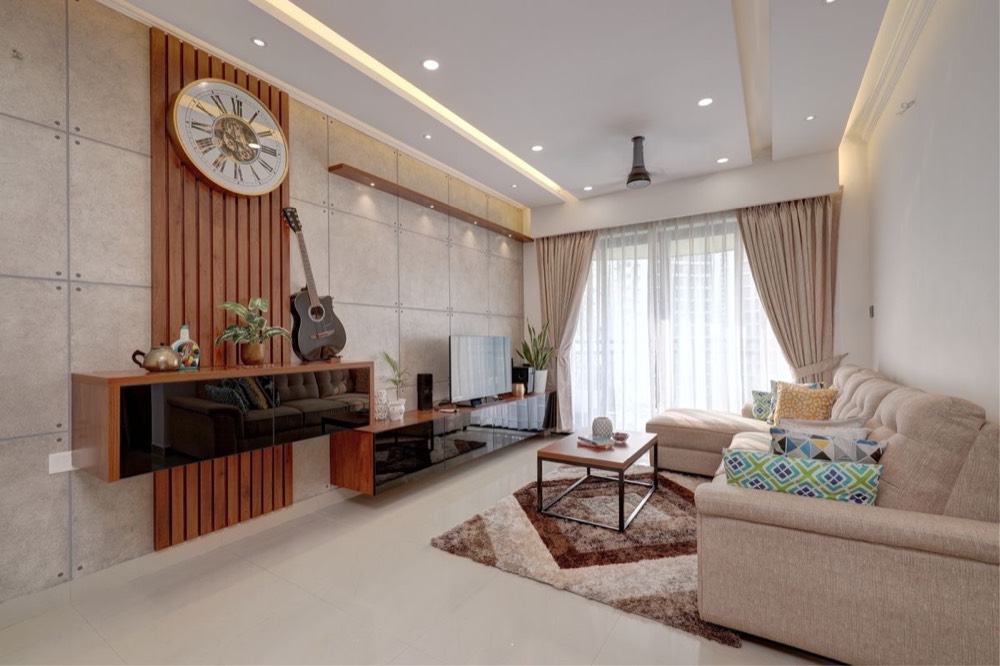
Warm modern living room with a sofa, wood panelling, cove lighting and floor-length curtains.
01 / Living Light that layers. Cove, accent and task light at the right level — and curtains that close before the glare.
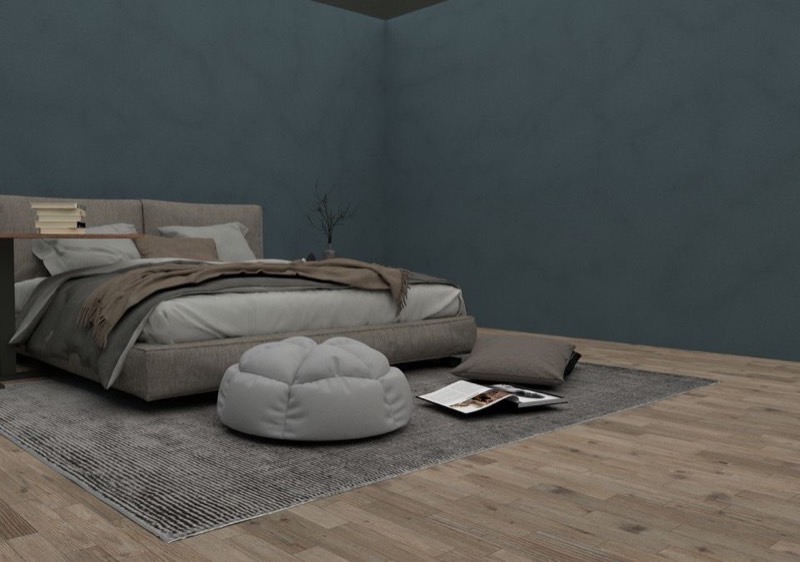
Low-lit bedroom with a platform bed, soft textiles and a deep blue-grey wall.
02 / Bedroom Cooler before you are. The AC starts before the room warms up. Blackout and wake-up light do the rest.
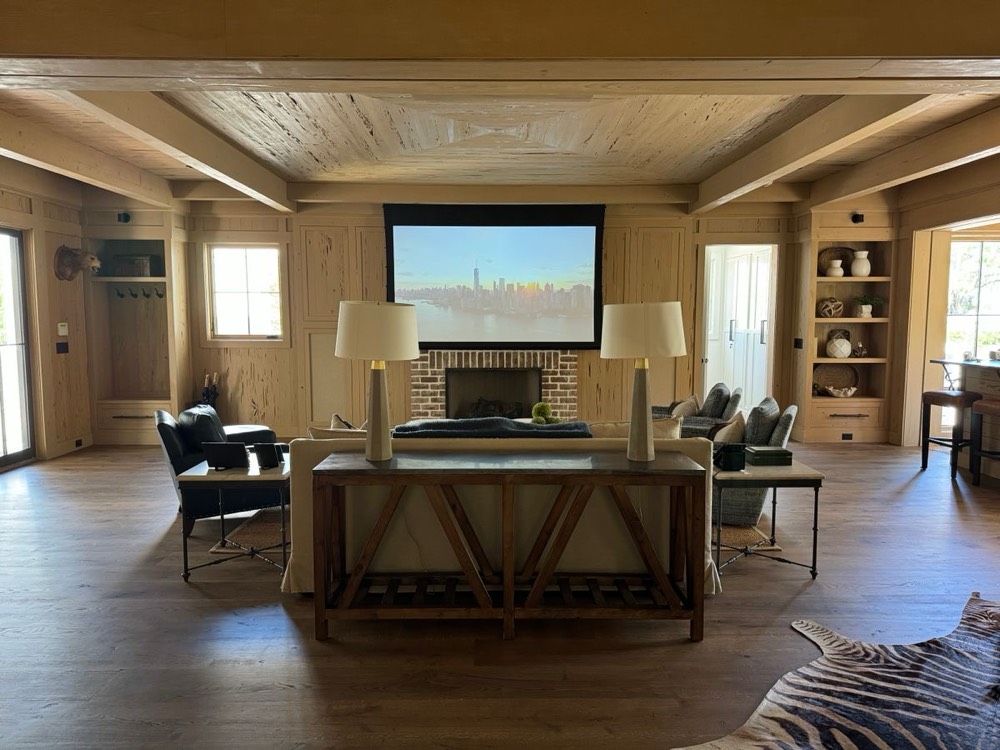
Home cinema with a projector screen above a fireplace and warm low lighting.
03 / Cinema One tap. The room becomes a cinema. Projector on, blinds shut, lights to 8%, soundbar at movie level.
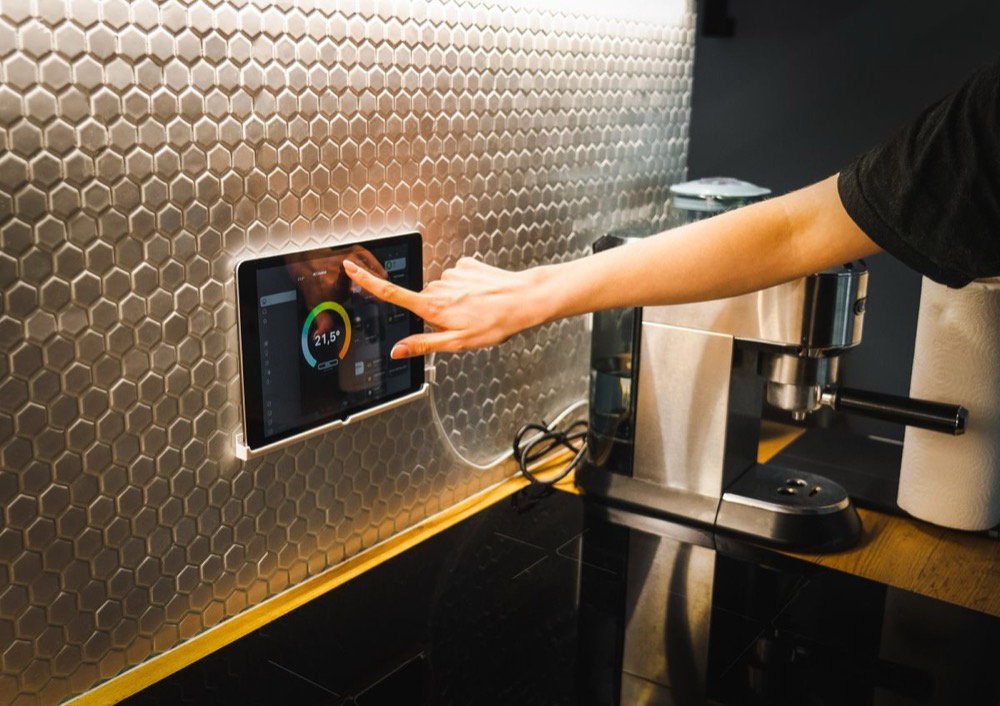
Hand tapping a wall-mounted home control tablet showing temperature and room controls.
04 / Control One panel for the whole house. Lights, climate, scenes and cameras on a wall tablet — the same system as the phone.
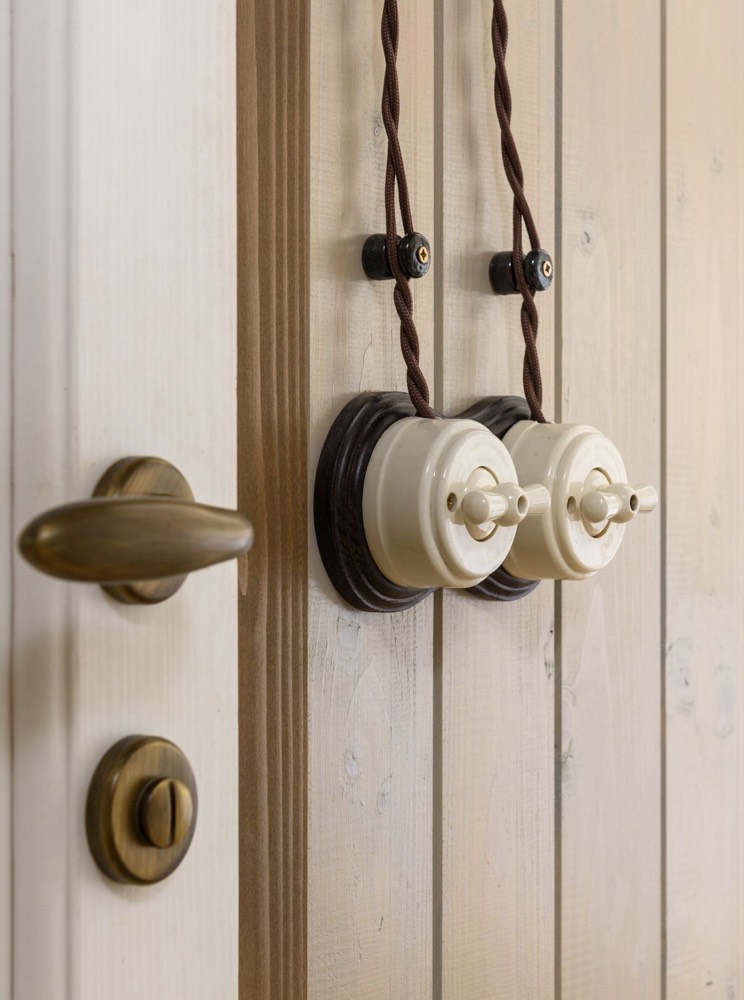
Close-up of vintage brass and ceramic light switches beside a wooden door frame.
05 / Retrofit The switch was already there. IR, RF and relays bring old hardware into the same system. Replacement is the last resort.
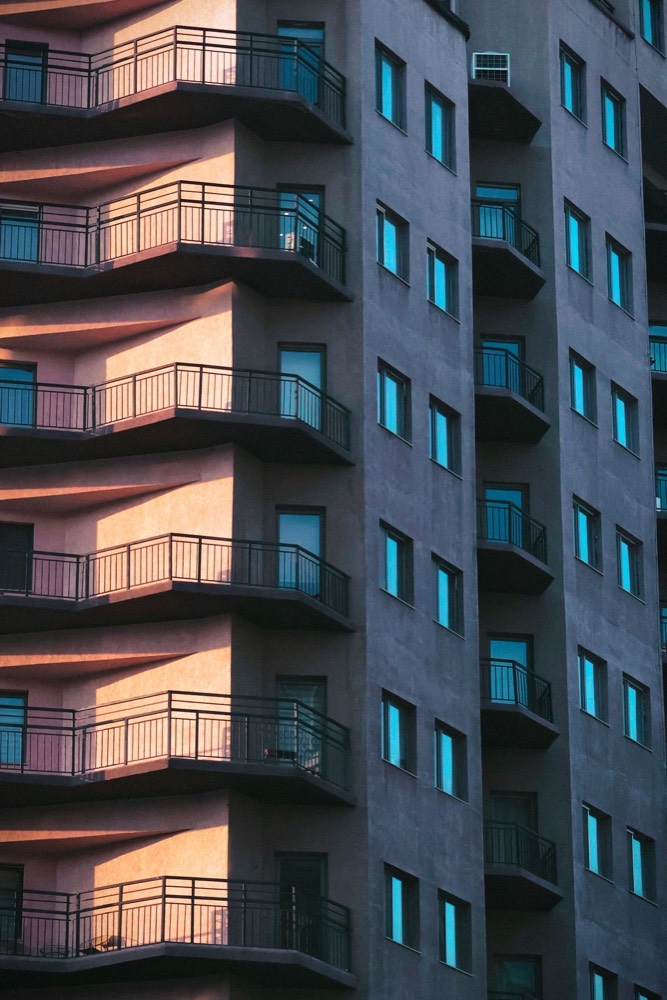
Apartment balconies at dusk, with warm sunset light on the facades.
06 / Balcony Before the rain. The awning closes on a weather trigger; the balcony lights wait for the evening.

Reference imagery, not client projects. The systems are the ones we design and commission. Photography via Pexels.

07 — One interface

One app. Handed over clean.

No five-app handover. Lighting, climate, security, media and energy live in one interface — the same one on your client’s phone, the wall tablet and the family’s devices.

Handover includes labelled devices, a scene list, a one-page guide and a support number your client can actually reach.

7:42
Wednesday, 2 November
Good evening,
Home.
StatusAway
All secure
3 cameras · doors locked
Arrive Focus Cinema Sleep
Living room 40% · 24°
Bedroom AC on · 24°
7:41 PM · Doorbell

Courier, blue jacket. Left a parcel at the door. Local AI description, no cloud.

08 — Local AI

Privacy is part of the specification.

High-end clients ask where their data goes. With Ambient Form Studio, the answer is simple: it stays in the house. Camera descriptions, voice recognition and the language model run on a hub inside the apartment — not on someone else’s server.

Cameras & mics Events happen in the room
Your hub Home Assistant + local vision, speech and language models
Your phone Only what you need, when you need it

No round trip to a data centre

Visitor descriptions

A local vision model turns a blurry snapshot into “a courier in a blue jacket left a parcel” — and keeps the history on your hub.

Voice without ears

Wake word, speech-to-text and text-to-speech all run on the hardware in the house. No audio sent to a speaker company.

Keeps working

Lights, AC, locks and scenes keep running if the internet drops. Remote access and alerts need the internet; the house doesn’t.

Yours to audit

Open-source Home Assistant at the core. No black box, no mandatory cloud subscription to keep the basics alive.

Cloud-first

  • Camera footage leaves your home
  • Most controls stop when the internet does
  • Per-camera cloud plans
  • The vendor holds the keys

Ambient Form local

  • Footage stays on your hub
  • Automations keep running offline
  • No mandatory cloud fee
  • You hold the keys

After handover

You don’t need us for every new rule.

We can leave a local AI agent on the hub. Describe the automation in plain language — “when the afternoon sun hits the balcony, close the awning” — and it can add it to the system. No cloud account, no ticket, no waiting.

When something physical needs a visit — a motor, a lock, a sensor, a failed device — we’re still here for on-site troubleshooting, repair and recommissioning. The system is yours; we’re the backup.

Ask about handover
Local agent · example On your hub

“When the afternoon sun hits the balcony, close the awning. Open it again at sunset.”

Ambient Form agent “Done. I’ll close it when the balcony light stays strong for five minutes, and reopen at sunset. You can edit the rule any time.”

No cloud · editable · runs on your hub

Streaming services like Spotify and Netflix still use the internet. We’re talking about control, cameras and voice — the parts that should never need a data centre.

09 — The proof

This isn’t a concept deck.

A live installation, not a render. Every automation on this page has been lived with.

It’s the stack running a real home today — 85 automations, 12 dashboards, 3 camera feeds and one app. Built, broken, fixed and lived with.

85Automations in daily use
12Dashboards on one hub
3Camera feeds, processed locally
1App to run it all

The numbers are from the live system — awnings, projectors and older audio, all running from one app.

10 — Process

From first drawing to final scene.

We work alongside your studio and your site team, not around them. The earlier we’re involved, the less visible the technology — and the fewer surprises at handover.

01

Brief & walkthrough

Floor plan, elevations, device list, client lifestyle. We flag what’s possible — and what isn’t worth it.

45 minutes
02

Automation blueprint

Device schedule, scene list, network and power notes, retrofit map and a budget you can build from.

3–5 days
03

Site coordination

We work with your electrician, carpenter and vendors. Ceiling, joinery and cable routes sorted before they close.

As needed
04

Commission & handover

Scenes tuned on site, labels, a one-page client guide, and a two-week snag window.

1–3 days

Coming in after first fix? We can retrofit — it just means a few more visible decisions.

11 — Indicative pricing

Start with one system. Or the whole home.

Indicative launch pricing for Mumbai and Hong Kong. Other locations by arrangement — start with a video call, then a walkthrough or site visit once the scope is clear.

Pricing region
Lights + presence 1–2 BHK
From₹2,00,000

Start with the layer you feel every day: light that follows the room and the people in it.

  • Smart lighting & dimming
  • mmWave presence sensors
  • 4–6 scenes + one app
  • Renter-safe install
  • Two weeks of tuning
Enquire
Full design + automation 3 BHK+
From₹12,00,000

For a new home or full redo: the interior and the technology designed together, from first sketch to handover.

  • Space planning & materials
  • Lighting & joinery design
  • Automation design & commissioning
  • Site coordination
  • Cinema / multi-floor quoted separately
Enquire
Mumbai

Home visits, site supervision and commissioning — our home base.

Hong Kong

Design and retrofit projects; local labour and electrical costs reflected in pricing.

Elsewhere

Remote-first. A video call to understand the home, then a site visit or local partner if needed.

Book a video call

Indicative launch pricing for Mumbai, exclusive of GST. Final scope and quote after a walkthrough; hardware and site work line-itemed before you approve. Studios: see the engagement models for trade terms.

12 — Engagement

Three ways to work together.

Fixed-scope fees, not hourly surprises. Every engagement starts with a 20-minute call, a floor plan and an honest view of what your project needs.

Automation blueprint
Fixed fee

For studios that need the plan, not the install.

  • Automation intent & budget
  • Device & lighting schedule
  • Network, power & joinery notes
  • Retrofit map
  • Scene list
Request a blueprint
Studio partner
Retainer

For practices with a pipeline of projects.

  • Priority project slots
  • Trade rates for studios
  • White-label drawings & docs
  • On-call advice & site visits
  • Quarterly technology update
Partner with us
Vendor-neutral by defaultWe specify what fits the project, not what’s easiest to sell. Hardware at actuals, approved by you.
Proposal in 3 working days
  • Fixed project fee
  • Trade rates for design studios
  • No mandatory cloud subscription
  • Handover documentation
Homeowner? We also take on direct residential projects — including full interior design and automation. Send us your floor plan and we’ll tell you honestly whether we’re the right fit.

Fees depend on scope, site access and the number of systems. We confirm everything in writing before work starts. Blueprint fees are credited against commissioning if we take the project through to handover.

Questions

The things designers ask.

If yours isn’t here, send a message — we answer within one working day.

Do you work white-label?

Yes. We can produce drawings, schedules and client documentation under your studio’s name and stay invisible on site — or be introduced as your automation partner. Either way, the client relationship stays yours.

We already have an electrical or AV contractor. Can you work with them?

Yes — that’s usually the best setup. We define the automation scope and the interfaces, then coordinate with your contractor on power, network, ceiling and joinery requirements. We’re happy to work to their programme.

What do you need from us to quote?

A floor plan, a brief on how the client lives, any device list they already have, and a few site photos if available. If drawings aren’t ready, a rough plan and a 20-minute call is enough to start.

Can you automate devices the client already owns?

That’s our default. ACs, awnings, projectors, curtains, lamps and older audio can often be brought in through IR, RF, relays and bridges. We audit what’s there first and only recommend replacement when the existing device genuinely can’t be integrated.

Do you sell hardware?

We’re vendor-neutral. We can supply and commission, or specify for your vendor to supply. Hardware is billed at actuals with your approval, and we don’t design around a single brand’s catalogue.

How early should we involve you?

Concept or design development is ideal — that’s when power, network, ceiling and joinery decisions are still open. We can also retrofit at the end of a project; it just means a few more visible compromises.

How do you charge?

A fixed project fee based on scope, not hourly billing. The blueprint is a standalone deliverable; if we take the project through commissioning, that fee is credited. Studio partners get trade rates and priority slots. See engagement models.

What about privacy and data?

Camera, voice and automation data stay on a hub inside the home by default. There is no mandatory cloud subscription and no vendor access to the client’s footage unless they explicitly grant it for support. The full picture is in our privacy note.

Do you work outside Mumbai and Hong Kong?

Mumbai and Hong Kong are our home markets. Elsewhere, we start with a video call, then decide whether a site visit, a local partner, or both make sense. Travel and site supervision are quoted separately.

What runs the system?

Most of it runs on Home Assistant on a hub inside the home — open source, local automations, local voice and local AI. The cloud is optional, not the foundation.

Can we visit a live project?

For serious enquiries, yes — subject to the client’s permission. We can also demonstrate the system and the app over a video call, which is usually faster.

Next

Bring us into your next project.

Send a floor plan and a brief. We’ll come back with an automation scope, a device schedule and a fee proposal within three working days.

Mumbai & Hong Kong · elsewhere by arrangement · no obligation · we’ll tell you if we’re not the right fit.

Research & sources

The working behind this page.

The full landscape, the method and every source, read on 6 November 2026. Skip it if the short version was enough.

The full competitive landscape
01 ₹15–30 lakh
3BHK

The premium integrator.

The finished room: bespoke keypads, lighting scenes, AV, blinds and security from one catalogue, installed and warranted by a dealer. This is the benchmark for how a smart home should feel.

What you get
Design-led hardware, commissioning, a single warranty, a showroom and a name to call.
Where it stops
The programming is dealer-authored. Retrofit often means new wiring. A keypad can cost more than a phone. The annual contract is 8–15% of the project.

Names you’ll meet: Crestron, Lutron, Basalte, Savant. In Mumbai, Trescent Lifestyles has built a business on this model since 2006; the lowest band on its enquiry form is ₹25–50 lakh.

02 ₹8–20 lakh
3BHK

The KNX / Basalte integrator.

An open bus with a luxury surface. KNX is a real standard, not a proprietary one, and a good integrator can mix Basalte, ABB and CORE keypads in one project. That is a genuine advantage over Crestron and Control4.

What you get
A robust wired bus, wide device choice, and — if the ETS file is handed over — any KNX professional can service it later.
Where it stops
The bus still has to be wired. Basalte keypads run ₹35,000–90,000 each before installation. Programming needs ETS6 Professional (€1,000) and a certified programmer, and many homeowners never receive the project file.

Names you’ll meet: Basalte, ABB, CORE, Gira, Jung, MDT, Theben; KNX-certified integrators in Mumbai and Pune.

03 ₹5–10 lakh
3BHK

The curated system at our price.

Control4 is a dealer-installed system with a curated catalogue. AHA Smart Homes publishes a ₹5 lakh complete-3BHK benchmark from two Mumbai experience centres. If you want one brand, one showroom and one warranty at our price, this is the honest alternative.

What you get
A single product line, a showroom, a known integration path and a dealer on the phone.
Where it stops
You are inside one catalogue. Adding a device outside it means a dealer visit and dealer-only Composer Pro programming. The ₹5 lakh is a benchmark, not a quote, and the scope is fixed to the package.

Names you’ll meet: Control4, AHA Smart Homes; builder packages that arrive with the flat and end at handover.

04 ₹1–2.4 lakh
3BHK

The DIY stack.

Aqara sensors, a couple of smart switches, an IR blaster, a Hue bridge and the app that came with each. Cheap to start, genuinely useful in a rental, and entirely yours — until something stops working.

What you get
Low entry cost, incremental purchases, no dealer, no contract, no wall chasing.
Where it stops
Four to six apps. Cloud accounts, including Hue’s mandatory account since 2023. Automations only as good as the time you put in. When a routine breaks at 11pm, you are the support desk.

Names you’ll meet: Aqara, Xiaomi, Philips Hue, Wiz, SwitchBot, Apple Home, Google Home, Alexa — and a different app for each.

05 ₹4.5–5.5 lakh
3BHK

Ambient Form: the open layer at the price of a curated one.

One layer over whatever hardware is already there. Not a catalogue and not a single app: a local hub that speaks the protocols, one interface, and a studio that designs the interior and the automation together. At ₹5 lakh we are 37–75% below the published KNX band and 67–83% below Crestron, without giving up the functions that matter.

What you get
Any brand that speaks a protocol, retrofit without opening walls by default, one app, local control, documentation, and the system in your name.
Where it stops
We are not a bespoke keypad manufacturer and not the right firm for a 10,000 sq ft villa with a plant room. We say so below.

What we don’t sell: a brand, a licence, a five-year lock-in, or a showroom you pay for.

Sources & method
  1. Trescent Lifestyles — https://trescent.com/. Mumbai integrator; brands (Lutron, Crestron, Basalte, Sonos), projects, awards, and the ₹25–50 lakh lowest band on its enquiry form; read 6 Nov 2026.
  2. The Economic Times — how Trescent became a ₹10 crore firm — https://economictimes.indiatimes.com/small-biz/entrepreneurship/how-monica-sambharya-cashed-on-home-tech-solutions-to-make-trescent-a-rs-10-crore-firm/articleshow/12908630.cms. Founded December 2006 by Harshul Parikh and Monica Sambharya; ₹40 lakh seed; ₹8–10 crore turnover in 2012; 15–18 clients a year; 30 Apr 2012.
  3. GMHS — KNX vs Crestron vs Control4, India buyer’s guide — https://growmoresolutions.com/blog/knx-vs-crestron-vs-control4-india. Crestron 3BHK ₹15–30 lakh; KNX ₹8–20 lakh; Control4 2–3BHK ₹5–10 lakh; lead times and lock-in; 15 Jun 2026.
  4. Onwords — Crestron Home in India: costs and dealer — https://www.onwords.in/smart-home-cost-india. Crestron villa ₹25–60 lakh; programming 10–15% of budget; “below ₹25 lakh, buy KNX”; 2026.
  5. TechVault — Basalte vs ABB vs CORE keypads in India — https://www.techvault.co.in/blog/article/basalte-vs-abb-vs-core-keypads-india-comparison-2026. Basalte keypads ₹35,000–90,000 each; ABB ₹20,000–65,000; CORE ₹18,000–50,000; ETS handover and KNX portability; 20 Jun 2026.
  6. KNX Association — ETS6 licences — https://support.knx.org/. ETS6 Professional €1,000; ETS6 Home €350; KNX USB dongle €80; read 6 Nov 2026.
  7. KNX Association — interworking — https://www.knx.org/knx-en/for-professionals/benefits/interworking/. KNX as an open, multi-vendor bus standard; read 6 Nov 2026.
  8. AHA Smart Homes — the real cost of a 3BHK — https://ahasmarthomes.com/. Mumbai ₹5 lakh complete-3BHK benchmark, ₹17,000–25,000 per window; 6 Aug 2026.
  9. Studio Matrx — smart home AMC and servicing in India — https://studiomatrx.org/. AMC 8–15% of installed value a year, parts extra; device EOL 3–7 years; 5 Jul 2026.
  10. Home Assistant — Philips Hue and the mandatory account — https://www.home-assistant.io/blog/2023/09/22/philips-hue-force-users-upload-data-to-cloud/. Hue moved to mandatory accounts and cloud upload in September 2023, a cautionary tale for cloud-dependent DIY; 22 Sep 2023.
  11. Home Assistant — https://www.home-assistant.io/. Local-first automation hub, integrations and supported protocols; read 6 Nov 2026.
  12. Matter — https://csa-iot.org/all-solutions/matter/. The interoperable standard behind the “any brand” claim; read 6 Nov 2026.
  13. Control4 — https://www.control4.com/. Curated dealer-installed system; Composer Pro is dealer-only; read 6 Nov 2026.
  14. Crestron — https://www.crestron.com/. Product and dealer model for the premium integrator segment; read 6 Nov 2026.
  15. Frankfurter / ECB reference rates — https://api.frankfurter.app/latest?from=USD&to=INR. USD ₹94.48, EUR ₹106.04 on 5 Nov 2026, used for converted list prices.
How the ranges were built. Crestron, KNX and Control4 bands are published 2026 India trade ranges, cross-checked against hardware list prices. Basalte keypad pricing is from a 2026 India installer comparison. The AMC band is the range published by Indian service firms. The DIY band is the sum of typical Indian retail prices for a 3BHK, not a quote. Trescent’s ₹25–50 lakh floor is the lowest band on its own enquiry form, read on 6 November 2026. AHA’s ₹5 lakh 3BHK is a published benchmark, not a quote. Our own figures are the launch prices on the studio site. Dealer margin is not published anywhere we could verify, so the brand/tools slice is a modelled allowance, not a claim about any firm. Nothing here is a valuation of a competitor, and no competitor’s non-public price is used.

Figures are indicative, not a quote. A firm is named only where it has published a price.